This guide helps you assess Vehicle Availability with a practical, expert approach before committing to a purchase. “Vehicle Availability” reflects what models are currently in stock, where they’re located, and how quickly they can be reserved or delivered. You’ll learn how to compare supplier reliability, check conditions/requirements, and plan for availability changes with objective, risk-aware steps.
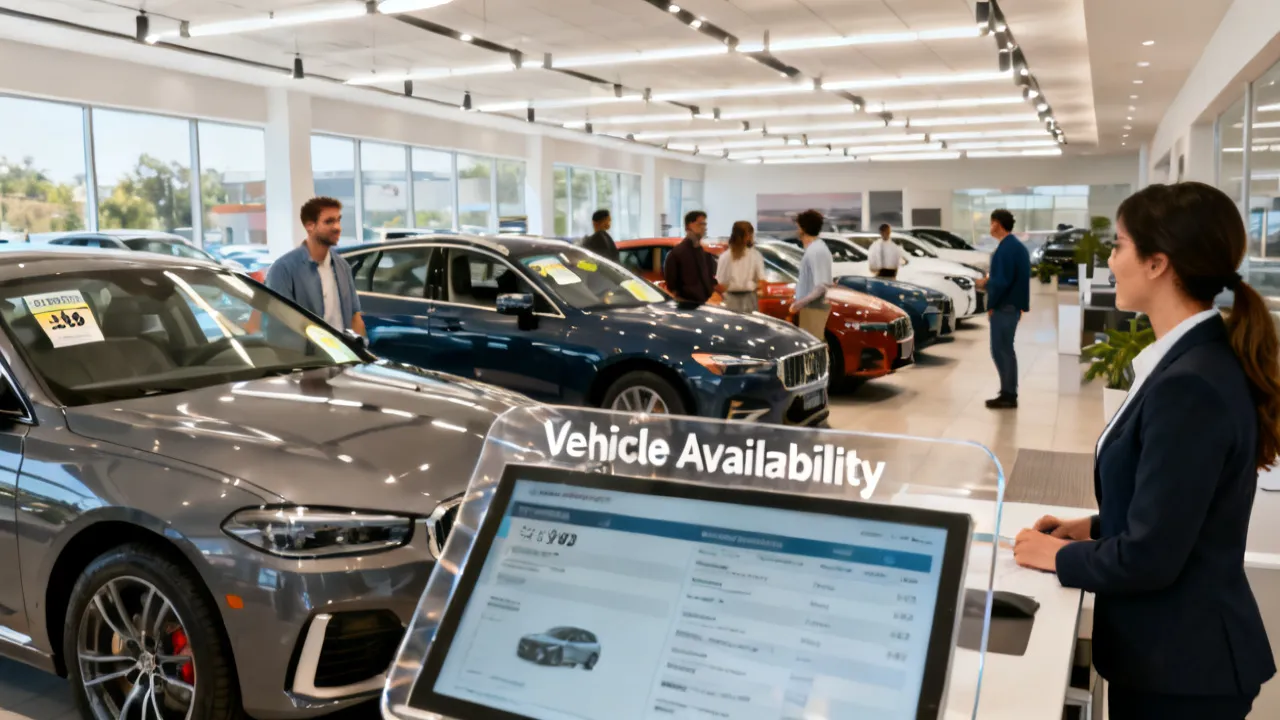
When you’re trying to secure the right car at the right time, Vehicle Availability is the deciding factor behind your options—what you can buy now, what you must wait for, and how reliably a supplier can deliver once you place an order. In practical terms, it’s not only about whether a vehicle exists in inventory; it’s also about how quickly it can be reserved, transferred, inspected, and delivered under the conditions/requirements tied to the sale.
From an industry perspective, the top buyers treat availability as a supply-chain question: stock status, lead time, allocation rules, documentation timing, and the credibility of the supplier’s process. That approach reduces the common frustration of “good news later” messages that don’t match the timeline you need.
To make that idea feel concrete, consider the difference between three scenarios that all sound similar to a shopper:
“Vehicle Availability” is the set of answers that determine which scenario you’re actually in.
Vehicle Availability is measurable through observable signals. Instead of relying on generic claims, focus on confirmations that can be checked:
These are the professional indicators that separate genuine availability from optimistic scheduling.
One way to sharpen your evaluation is to require each signal to answer a different question:
When all five answers line up, Vehicle Availability becomes predictable.
Vehicle Availability can shift quickly due to logistics, market demand, and allocation practices. Even when suppliers appear to have inventory, the details matter: one “available” listing may refer to a vehicle that’s reserved internally, another might be in a holding lot awaiting inspection, and a third could be earmarked for a different distribution route.
In major automotive markets, dealerships and distributors manage inventory using allocation systems and periodic replenishment cycles. That’s why “available today” can turn into “available after processing” within days—especially when demand spikes or shipment schedules shift. For objective background on how the auto supply chain operates, consider using reports from reputable industry sources such as the International Organization of Motor Vehicle Manufacturers (OICA) for production context and J.D. Power or S&P Global Mobility for broader vehicle lifecycle and market commentary.
To understand why “availability” isn’t static, it helps to break the journey from manufacturer to driver into practical stages. Different stages create different kinds of uncertainty, which is why “in stock” language can be misleading if you don’t know which stage the vehicle is in.
Although exact processes vary by market and supplier, a vehicle’s path often includes stages such as:
When you ask about “availability,” you’re really asking: which stages are already completed, and which stages still have moving parts?
Not all suppliers manage Vehicle Availability in the same way. Industry professionals typically assess suppliers across three dimensions: transparency, operational discipline, and communication consistency. Here’s how that translates into buyer decisions.
Look for specifics that reduce ambiguity: VIN-level identification, build/trim confirmation, and clear location status (on-site vs. incoming). If the supplier can’t clarify whether the car is truly available to you—by VIN or by strict allocation terms—it’s a warning sign.
To evaluate transparency more effectively, request the “proof items” that typically accompany a high-confidence inventory claim:
Transparency doesn’t mean “lots of text.” It means the information is precise enough that you can trust it and build your timeline around it.
Availability isn’t just about possession; it’s also about preparation. A disciplined supplier has a consistent workflow: inspection, detailing, documentation, financing support, and delivery scheduling. Ask what steps occur between deposit and handover, and whether any steps routinely delay the timeline.
Operational discipline can be tested with scenario questions, such as:
A supplier that has disciplined operations can answer these questions without hesitation because they operate the same way every time.
In professional operations, changes are communicated with measurable updates (e.g., “shipment received,” “inspection completed,” “registration paperwork submitted”). Vague updates are often a symptom of internal uncertainty.
To separate consistent communication from vague reassurance, pay attention to whether messages include concrete milestones. Examples of evidence-based updates include:
If the supplier communicates only in generalities—“soon,” “we’re working on it,” “it should be there”—your timeline risk remains high.
Even though your price depends on trim, market conditions, and financing choices, availability affects cost in ways that are easy to overlook. When supply is tight, certain models may experience higher effective pricing through add-on packages or limited allocation. For buyers, the top tactic is not to chase the lowest headline number; it’s to identify the total cost to own the vehicle under the stated delivery timeline.
Key pricing-related questions tied to Vehicle Availability include:
This is especially important if you plan to trade in another vehicle or finalize financing based on a certain schedule.
Buyers often assume the price will stay stable once they agree. In practice, availability can influence price through several patterns:
Because these patterns can affect your final total price, demand itemized details and define what happens if the availability timeline changes.
Because Vehicle Availability can change, you should treat your purchase terms as documentation-first. Before you pay any deposit or proceed with financing, capture the following in writing:
Documentation turns “availability uncertainty” into a contract-based process. Without that, you may be forced to negotiate after the timeline slips—when leverage often shifts away from you.
A practical approach used by many professionals is to maintain a deal folder that includes every version of the quote, every message that changes timelines, and every document tied to financing and trade-in. It can be digital (email and cloud documents) as long as it’s organized and searchable.
Your “deal folder” can include:
This habit reduces the risk of misunderstanding and helps you respond quickly if availability changes.
Below is a supplement-style comparison that maps typical outcomes to conditions/requirements. This can help you decide what to prioritize when discussing Vehicle Availability with a supplier.
| Scenario | Availability Reality | Conditions / Requirements to Confirm | Buyer Risk Level |
|---|---|---|---|
| On-site vehicle ready | Vehicle is physically present and can be prepared quickly | VIN-level confirmation, inspection checklist status, itemized pricing | Low |
| In-transit vehicle | Vehicle exists but delivery depends on shipping and prep timelines | Carrier/ETA updates, deposit reservation terms, what triggers timeline revisions | Medium |
| Allocated to a different party | Vehicle may be “listed,” but not truly available to you | Written confirmation of allocation release, backup options, refund/transfer conditions | High |
| Supplier offers “similar” replacements | Exact trim may not be guaranteed if delays occur | Clear definition of “similar,” price protection terms, option equivalency rules | Medium to High |
The scenarios above capture the major availability categories, but many buyers run into “hidden” variables that sit inside those categories. Consider adding these checks to your evaluation, since they affect your lived experience of timing and certainty:
| Hidden Variable | Why It Matters | What to Ask/Confirm | Risk Level |
|---|---|---|---|
| Prep time variability | A vehicle can be “available” but not actually ready due to detailing/inspection workload | What exact prep steps remain, and what is their completion timeline? | Medium |
| Documentation lead time | Even if the car is ready, registration/title paperwork can delay handover | When are documents submitted, and what is the expected processing schedule? | Medium to High |
| Parts availability for accessories | Add-ons can be delayed if supply chains are constrained | Are accessories installed already? If not, what part constraints exist? | Medium |
| Financing timing dependencies | If your financing start date is tight, delays in paperwork can create cash-flow problems | When do you provide documents needed for financing approval and funding? | High |
| Trade-in synchronization | Trade-in payoff and pickup timing can collide with delivery dates | How do you synchronize trade-in pickup/inspection with the new car handover? | Medium to High |
If you want a repeatable approach, use this structured workflow. It’s designed to be objective and audit-friendly, so you can compare multiple suppliers without being swept up by marketing language.
Before contacting suppliers, list your non-negotiables: trim level, key options, preferred transmission/fuel type, and any color constraints. When Vehicle Availability is limited, these constraints determine whether you can accept an alternative.
A professional buyer also defines “acceptable substitutions” in advance. For example, you might allow a different color if it doesn’t affect resale value, but you might not allow replacement of driver-assistance packages or safety equipment. By defining what can change, you reduce stress later.
Ask for the VIN (or equivalent identifier), current location (on-site or in transit), and the current availability status. A credible supplier can usually provide details that match the vehicle you intend to purchase.
If a supplier can’t provide VIN-level data initially, ask for an alternative proof method. Some suppliers can provide inventory identifiers, order numbers, or system screenshots that show the vehicle is tied to a specific build and allocation record. The goal is always the same: confirm you’re discussing the right vehicle, not a hypothetical one.
Confirm what your deposit secures. Does it reserve the exact VIN, or does it only hold a general allocation to a model? Ask whether the deposit is refundable and under what timeline.
Also ask whether the deposit is transferable. In other words, if you need to switch financing terms or if timing changes, can the deposit be moved to another VIN or another vehicle in the same allocation group? Transferability can be the difference between a manageable setback and a costly dead-end.
Rather than requesting a single vague “delivery date,” ask for an estimated timeline broken into checkpoints (e.g., arrival confirmation, inspection completion, document submission, delivery appointment scheduling).
Trigger events are especially important. A good timeline doesn’t just list the end date; it tells you what changes the plan and when. Example trigger questions:
Request an itemized quote. Tie pricing to availability conditions: what happens if delivery is delayed, if add-ons are included, or if the vehicle’s options differ from the initial listing.
When comparing suppliers, also compare the “cost of uncertainty.” For example:
Even if you prefer the lowest price, don’t ignore the total risk you’re taking on. A “deal” isn’t just a number—it’s the expected outcome under real timeline variability.
Vehicle Availability can change as operations progress. Before handover, confirm the final vehicle identification, option set, and agreed price terms again—especially if your plan depends on a trade-in or a specific financing start date.
This step is commonly overlooked by buyers who assume the final paperwork automatically matches what they agreed. Professionals re-check because final details often shift due to last-minute inventory changes, accessory install timing, or documentation workflows.
In many consumer experiences, buyers encounter dealership communication that blends formal policy with day-to-day practicality. For example, it’s common to hear assurances like “we can usually get it arranged” or “the car should be ready soon.” Professionally, you should treat those as conversation starters—not commitments—until they are reflected in the purchase documentation.
When speaking with local staff, it can help to use a calm, specific checklist tone. Phrases such as “Can you confirm the VIN and reservation terms in writing?” often shift the conversation from sales optimism to operational clarity—exactly what Vehicle Availability requires.
It may also help to align your language with their workflows. Instead of only asking “When will I get it?” ask “What milestone do you expect to complete next?” That framing encourages the supplier to discuss actionable steps rather than vague promises.
Because availability can feel abstract, here are practical examples that show how outcomes differ when you successfully verify availability versus when you don’t.
A buyer finds a vehicle listed as available and asks for the VIN, confirms it’s in transit, and deposits with a written agreement that the deposit holds that VIN. The supplier provides a timeline with checkpoints. When the shipment is delayed by a few days, the supplier updates the buyer after the “receiving” checkpoint and documents the new expected prep completion date. The buyer’s timeline remains stable because key triggers and documentation expectations were agreed upfront.
This is the ideal outcome: Vehicle Availability is variable, but risk is controlled by verification and documentation.
Another buyer sees a vehicle listed and places a deposit based on verbal assurances that the car can be “held.” After several days, the supplier explains the vehicle is already allocated to another customer, and only a “similar replacement” might be possible. Without written terms defining “similar,” the buyer ends up with a different option set or a changed price. In this scenario, Vehicle Availability existed as a marketing label, not as a contract reality.
The buyer experiences this as a timeline failure, but the deeper issue is that the supplier’s reservation terms were not verifiable.
A third buyer has a deposit and expects immediate handover after arrival. The vehicle arrives early, but registration documentation is delayed due to submission timing or incomplete information needed for financing. The buyer finds the car is technically ready, but the paperwork pipeline isn’t. If the buyer had previously asked about documentation readiness and agreed on written triggers, they could have anticipated the delay and avoided misaligned expectations (for example, a tight insurance or scheduling plan).
This example highlights that Vehicle Availability extends beyond the physical car—it includes the ability to complete the sale flow.
Vehicle Availability typically includes whether a vehicle is physically present or allocated, how it can be reserved, lead time to delivery, and the operational steps required for preparation and documentation.
In other words, it includes both existence (is the car real and identifiable?) and deliverability (can the supplier reliably complete the sale steps on your timeline?).
Request VIN-level identification, current location status, and written reservation terms. If the supplier cannot confirm key details tied to the specific vehicle, treat it as uncertain.
You can also verify reliability by asking for the supplier’s update rhythm. A consistent update cadence (tied to actual milestones) is a strong sign that the supplier’s claim corresponds to operational reality.
Yes. Tight supply can influence the total purchase package through allocation limitations, add-on packages, or option availability. To control risk, compare itemized quotes and confirm what pricing is contingent upon.
Always check whether incentives or promotions depend on delivery timing. If the supplier’s quote assumes delivery during a promotional window, delays may change the net price.
It can be reasonable if the supplier’s reservation policy is clear and documented—especially refund terms and timeline trigger events. If terms are vague, use a lower-risk approach (e.g., reserving only after VIN confirmation).
Also consider your fallback plan. If the in-transit VIN becomes unavailable, do you have a backup configuration you’d accept? If you don’t, your “availability gamble” has no defined resolution path.
Your outcome should be governed by the documented contract terms—refund policy, transfer to a comparable vehicle, or any price/option protections. That’s why written conditions/requirements matter.
In best-practice agreements, the supplier defines what qualifies as a “comparable” substitute and how the price and options will be handled. If the supplier refuses to define those terms, risk remains high even if they sound confident.
From an efficiency standpoint, compare at least three options to reduce bias and improve clarity on Vehicle Availability. More can be helpful if you have strict constraints, but focus on verification rather than volume.
Comparing multiple suppliers also helps you identify whether a timeline is generally feasible or unique to one shop’s workflow. If multiple suppliers can’t confirm VIN-level availability or documentation readiness, your constraints may be the limiting factor—not the supplier.
For market context, you can consult reputable industry organizations and mobility data providers such as OICA and S&P Global Mobility. These are useful for understanding how production and distribution factors can influence availability.
Use these sources to calibrate expectations, not to replace verification with suppliers. Even if market conditions are tough, a specific vehicle’s availability can still be verified at the VIN level and managed through documented processes.
Ask for a reason. Sometimes delays are caused by system integration or timing, not bad faith. But if the supplier cannot provide VIN-level identifiers or cannot explain how the deposit ties to a specific vehicle, you should treat the claim as uncertain.
A reasonable alternative is to request a written agreement stating exactly what you are reserving (model/trim vs. VIN), and what guarantees the supplier provides. If they still won’t formalize it, choose a different supplier—or adjust your constraints to reduce the risk of substitution.
Move from end-date discussions to checkpoint discussions. Ask what stage the vehicle is currently in, what stage comes next, and what triggers a timeline update. Then document those triggers.
For example, if the supplier can’t confirm “inspection completed” by a certain date, but can confirm “shipment received,” you can plan your schedule around the checkpoint that’s actually controllable.
Yes. If you have time-sensitive needs—like a job start date, a limited insurance transition window, or a trade-in deadline—then the reliability of delivery can be more valuable than saving a small amount on the price.
In such cases, a supplier with stronger operational discipline may prevent costly downtime or administrative burdens. When comparing offers, evaluate not just the cost but the probability of meeting your timeline.
Vehicle Availability doesn’t have to feel like chance. With a verification-first mindset—VIN-level confirmation, documented reservation terms, transparent timelines, and itemized pricing—you can treat the buying process as a controlled decision rather than a gamble. As an industry expert would emphasize, the goal is not merely to find a car; it’s to ensure that the vehicle you intend to buy remains available under the conditions/requirements you agreed to, from reservation through final handover.
When you define your constraints, verify the right vehicle, document the sale flow, and re-confirm before handover, availability becomes something you manage. And when the market shifts—as it inevitably does—you’ll be prepared with the evidence needed to protect your schedule, your budget, and your expectations.
How Vehicle Availability Helps You Buy Smart
Understanding Vehicle Availability for Smarter Buying Decisions
Vehicle Availability Guide for Buying a Deal

Vehicle Availability: How to Find a Deal Faster

Vehicle Availability Guide for Buying a Car Cheap
Understanding Vehicle Availability for Smarter Buying
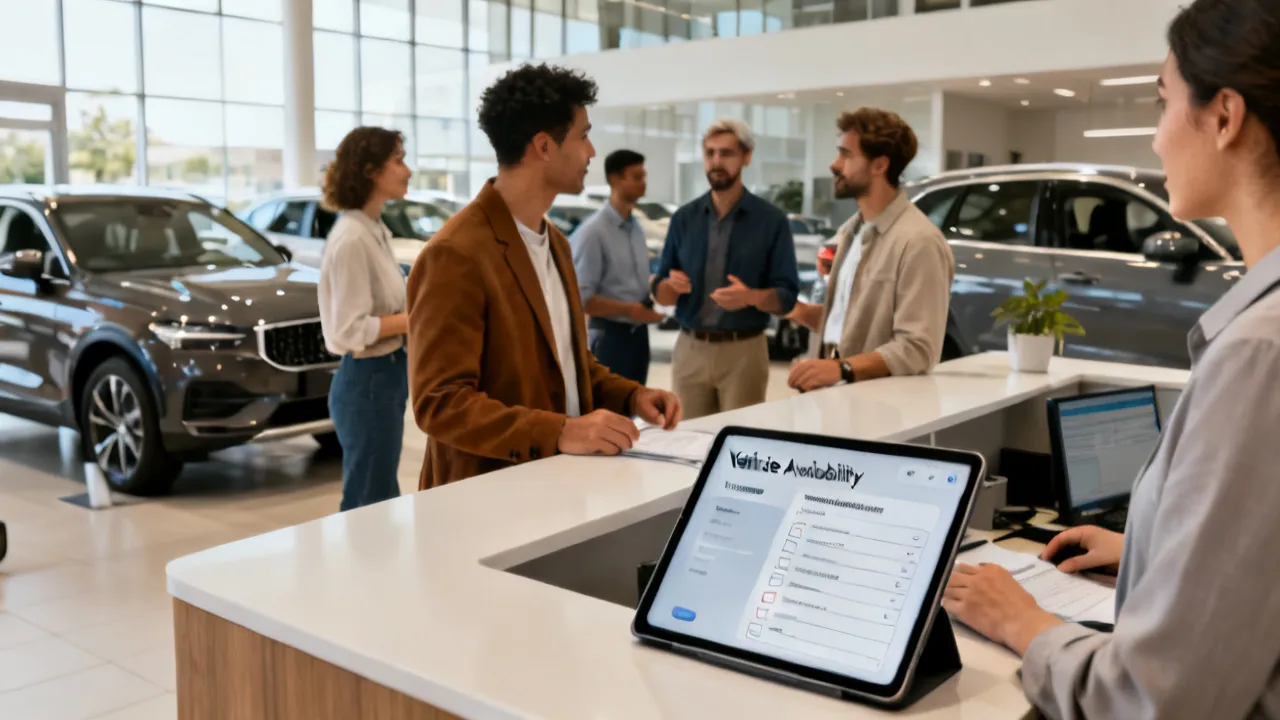
How to Evaluate Vehicle Availability Before You Buy
Vehicle Availability Guide for Buying a Cheap Car

Navigating Vehicle Availability to Buy a Cheap Car

Understanding Vehicle Availability for Smarter Buying Decisions
This guide explains how to evaluate Vehicle Availability to avoid delays, align expectations, and plan a smooth purchase or pickup. It reviews what Vehicle Availability means in real-world dealership or fleet operations, why stock changes quickly, and how to confirm current status responsibly. You’ll also find practical conditions, supplier-style checklists, and FAQs to support objective decision-making.
Understanding Vehicle Availability for Smarter Buying
This guide explains how to evaluate Vehicle Availability with supplier-backed process, inspection readiness, and realistic timelines. It provides objective background on inventory variability, lead-time drivers, and quality screening practices that affect what vehicles are actually ready to be sourced. Use it to plan a practical search strategy and reduce surprises at checkout.
How to Evaluate Vehicle Availability Before You Buy
This guide helps you assess Vehicle Availability with a practical, expert approach before committing to a purchase. “Vehicle Availability” reflects what models are currently in stock, where they’re located, and how quickly they can be reserved or delivered. You’ll learn how to compare supplier reliability, check conditions/requirements, and plan for availability changes with objective, risk-aware steps.
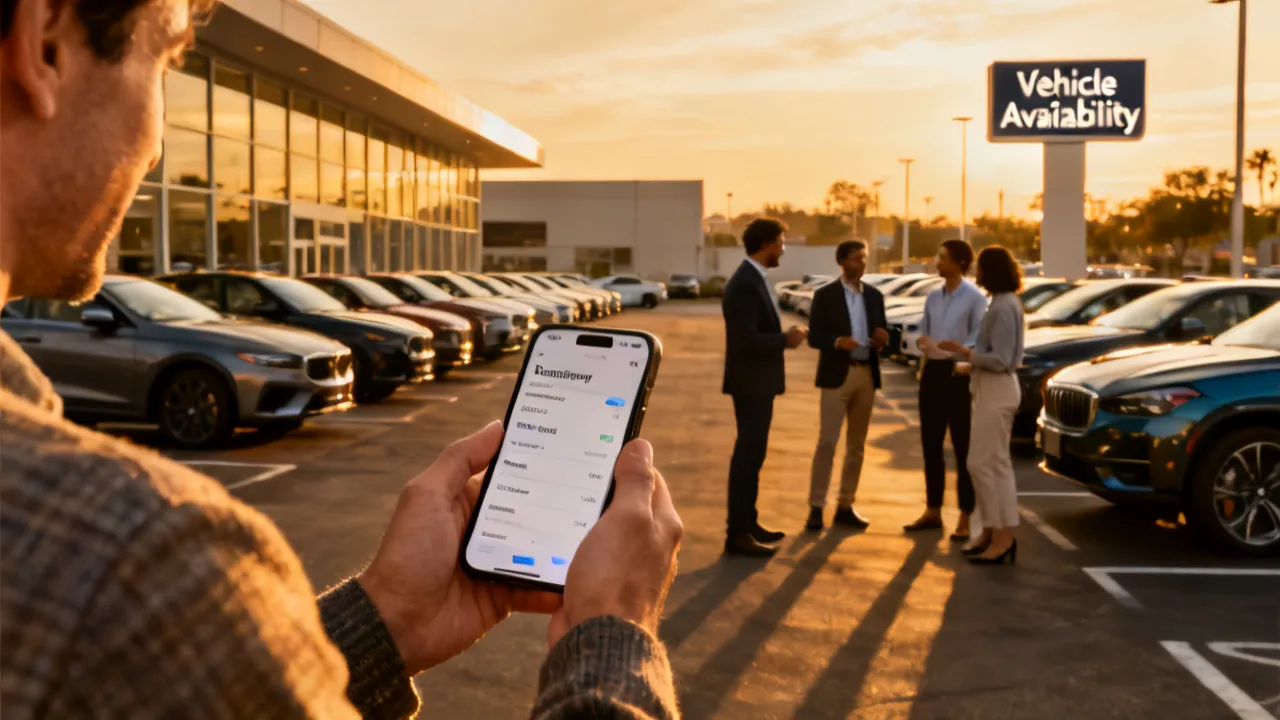
Vehicle Availability Guide for Smarter Vehicle Sourcing
This guide explains how to evaluate Vehicle Availability so you can plan purchases with confidence. You’ll find objective background on how inventory visibility, lead times, and supplier operations affect what’s actually available, when, and where. It also outlines practical evaluation criteria, requirements, and FAQs to support better decisions across dealerships and fleet sourcing channels.

Understanding Vehicle Availability for Smarter Buying Decisions
This guide explains how Vehicle Availability affects sourcing, pricing, and delivery timelines across dealerships and supplier networks. It provides objective background on how inventory moves, why stock visibility matters, and what “available” typically means in practice. You’ll also find decision criteria, conditions to verify, and FAQs to reduce uncertainty before signing.

Understanding Vehicle Availability for Smarter Buying Decisions
This guide explains how to evaluate Vehicle Availability before you commit to a purchase. It outlines how inventory timing, supplier reliability, trim or specification constraints, and lead times shape what you can actually buy. You’ll also find an objective checklist, practical conditions, and FAQs that clarify common misunderstandings around inventory status and sourcing.
